From the golden dunes of the Sahara to the blue streets of Chefchaouen, Morocco changes every few hours on the road. Here are the five regions we visit most, what to see in each one, and the tours that take you there.
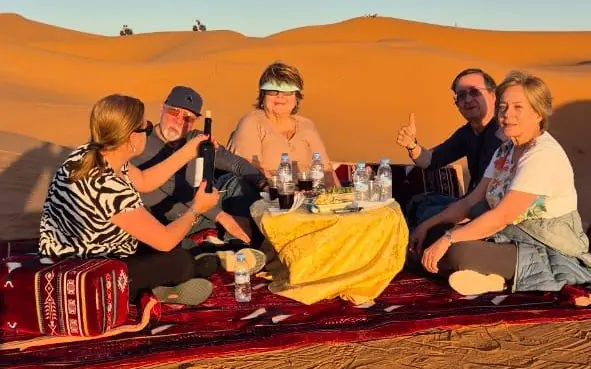
The dunes of Erg Chebbi, near the village of Merzouga, are the highlight of most trips to Morocco. Here you ride a camel into the dunes at sunset, sleep in a desert camp under the stars and wake up early to watch the sunrise from the top of a dune.
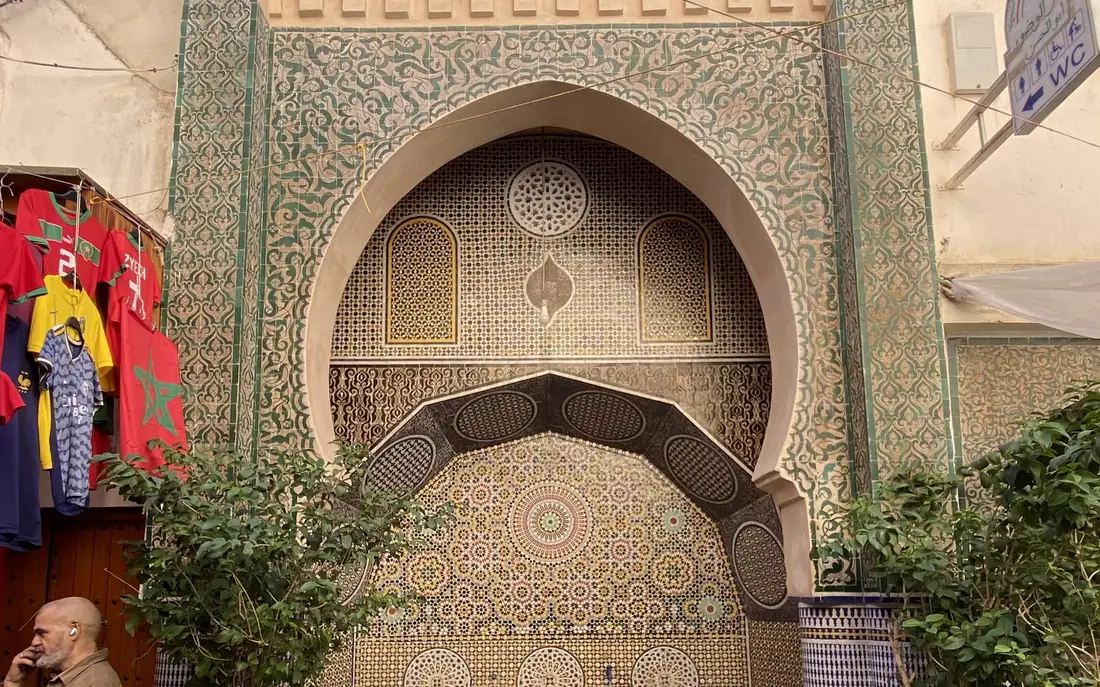
Morocco has four imperial cities, each one a former capital. Fes has one of the largest medieval medinas in the world, a UNESCO World Heritage Site full of madrasas, craftsmen and the famous Chouara tanneries. Marrakech is the red city, with Jemaa el-Fnaa square, the Bahia Palace and the Majorelle Garden. Meknes and Rabat, the capital, are quieter and easy to add on the way.
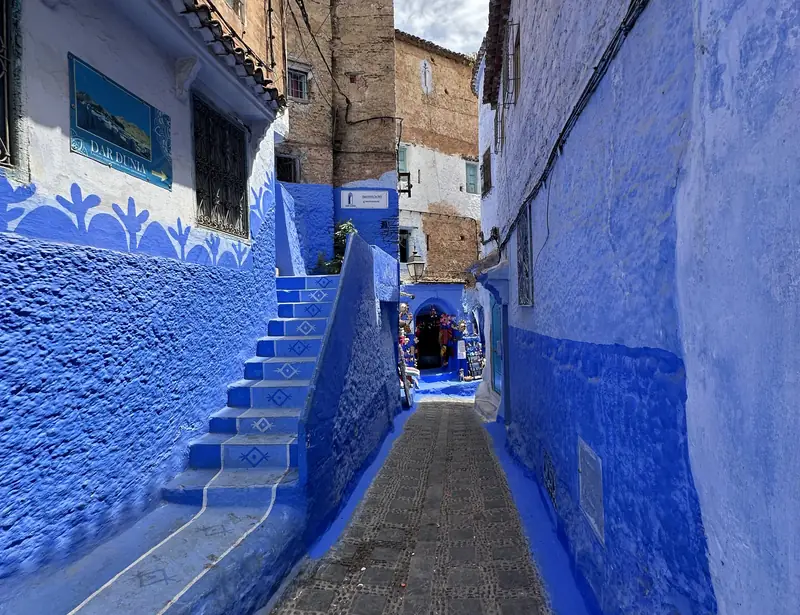
In the north, the Rif Mountains hide Chefchaouen, the blue city, where every street and staircase is painted in shades of blue. Tangier, on the Strait of Gibraltar, is where many travelers arrive by ferry from Spain, and a great start for a road trip south to the desert.
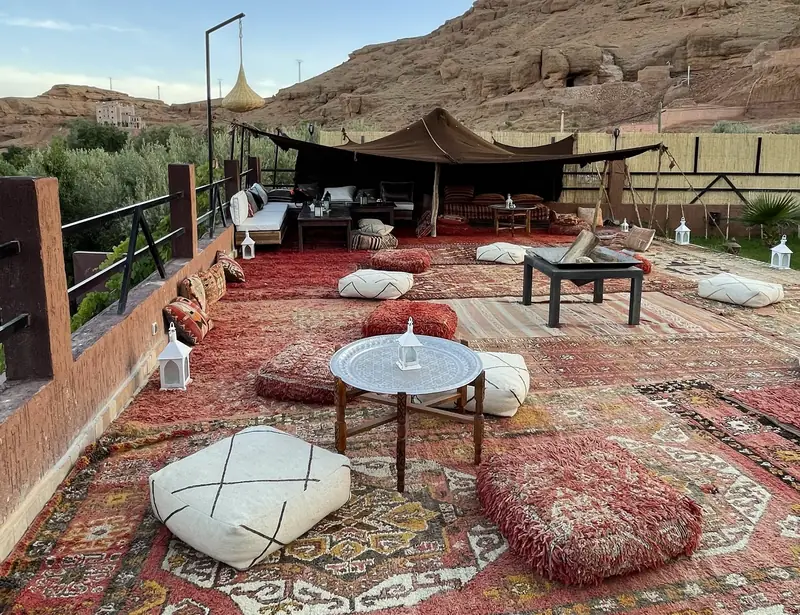
Between Marrakech and the desert, the road crosses the High Atlas over the Tizi n’Tichka pass and goes down into a land of kasbahs, palm groves and red canyons. The Kasbah of Aït Ben Haddou is a UNESCO World Heritage Site seen in many films, and the Dades Valley and the Todra Gorges are some of the most beautiful landscapes in Morocco.
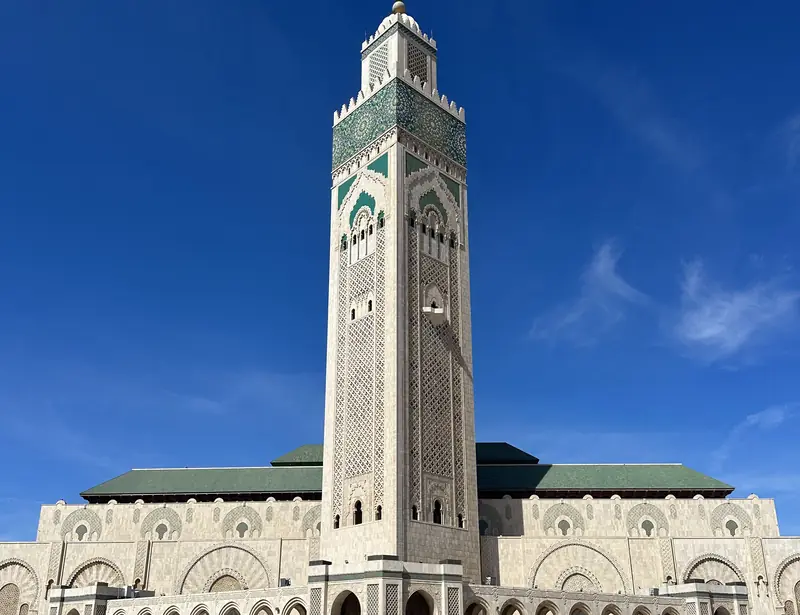
Casablanca is Morocco’s biggest city and the main airport for many travelers. Its highlight is the Hassan II Mosque, built over the ocean, one of the few mosques in Morocco that non-Muslim visitors can enter on a guided visit. Further south, Essaouira is a relaxed, windy port town with a white-and-blue medina, perfect for a day or two by the sea.
Tell us how many days you have and what you love. We will send you a free, personal plan within 24 hours.