

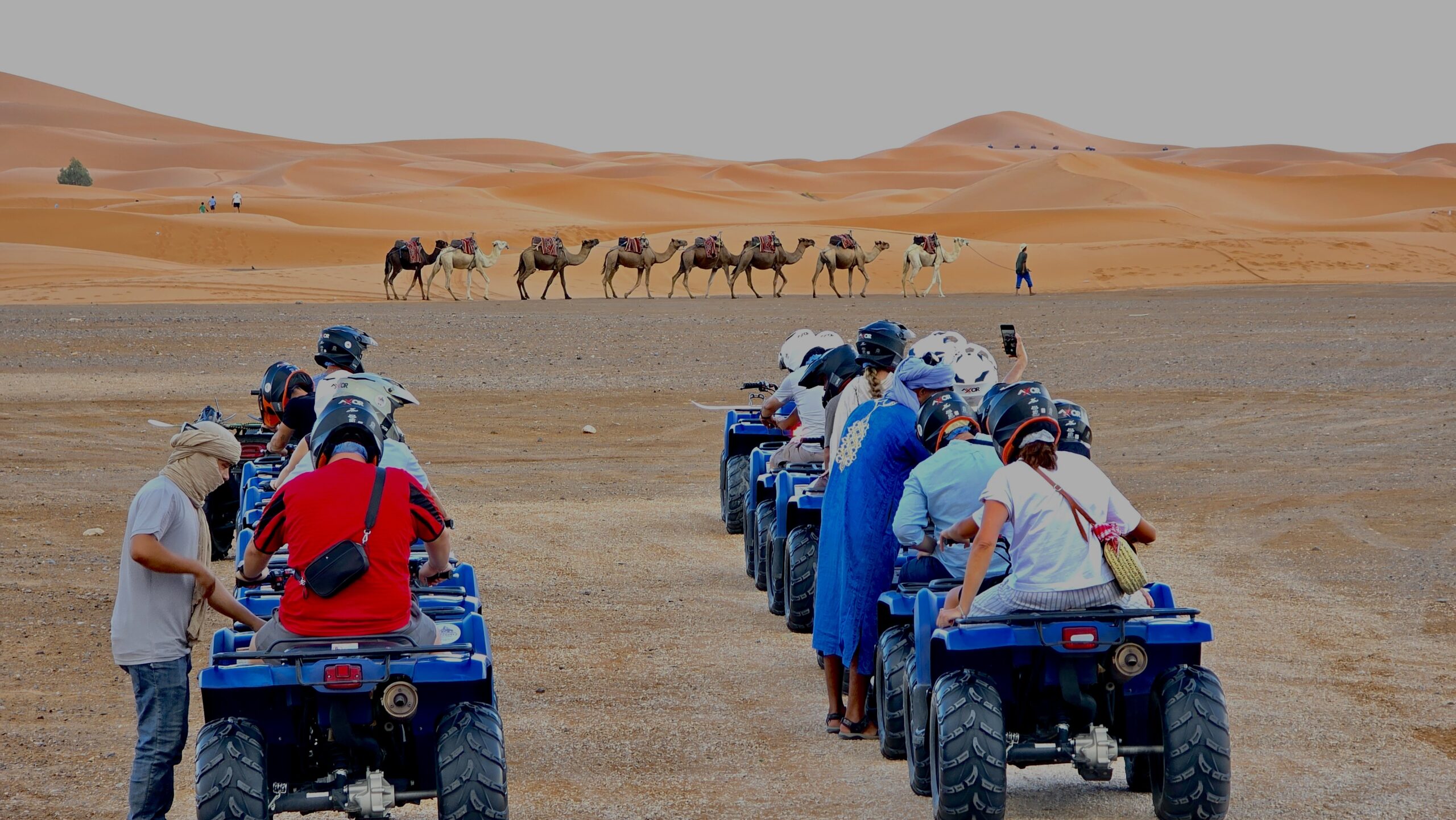
A night in the Sahara is the highlight of most trips to Morocco, but the desert is a place of extremes: hot sun during the day, cold air at night, and fine sand that gets everywhere. The good news is that you don’t need special equipment. With a few smart choices in your bag, you will be comfortable from the camel ride to the sunrise. Here is the Sahara desert packing list our drivers give to every guest before a tour to Merzouga.
The Quick Packing List
If you only read one part of this guide, read this one:
- A scarf or cheche (Berber head scarf) for sun and sand
- Sunglasses, sunscreen and lip balm
- A warm layer for the evening: fleece, sweater or light down jacket
- Comfortable closed shoes plus sandals for the camp
- Long, light trousers and a long-sleeve shirt
- A small backpack for the night in the desert
- A head torch or phone light
- A power bank and charging cable
- Wet wipes, hand sanitizer and a small pack of tissues
- A reusable water bottle
What to Wear in the Desert
The best desert clothes are light, loose and covering. Long sleeves and long trousers protect you from the sun much better than a T-shirt and shorts, and they keep the sand off your skin during the camel ride. Choose breathable fabrics like cotton or linen, in light colors.
Layers are the secret. The temperature in the Sahara can drop by 15 to 20 degrees between the afternoon and the night, so it is easier to add a fleece or a jacket than to carry one heavy coat.
A note on respectful clothing
Morocco is a welcoming country, and in the desert villages, nomad homes and small towns on the way, people appreciate modest clothing. For men and women, covering shoulders and knees is a simple way to show respect. You don’t need to cover your hair, but a scarf is useful for the sun anyway.
What to Pack by Season
| Season | Day / night in Merzouga | Pack this |
|---|---|---|
| Spring (Mar – May) | Warm days, cool nights | Light layers, a fleece, a light jacket |
| Summer (Jun – Aug) | Very hot days, warm nights | Loose cotton clothes, hat, extra sunscreen, electrolytes |
| Autumn (Sep – Nov) | Warm days, fresh nights | Light layers, a warm sweater for the evening |
| Winter (Dec – Feb) | Mild sunny days, cold nights (near 0°C) | Warm jacket, hat, gloves, thermal layer, warm socks |
Not sure when to travel? Read our month by month guide to Morocco.
For the Camel Ride
- Trousers, not shorts: the saddle rubs on bare legs
- A scarf around your face if the wind picks up
- Closed shoes or sandals with straps: you will walk on sand to the top of a dune for the sunset
- A phone strap or small cross-body bag, so you can take photos with both hands free
- Keep your hands free: your driver will help you with the small bag
The camel ride usually lasts about one to one and a half hours each way, at sunset and again at sunrise. If you prefer not to ride, we can arrange a 4×4 transfer to the camp.
For the Night in the Camp
Your main luggage stays safely in the vehicle with your driver, so you only take a small backpack into the dunes. Put in it:
- Warm clothes for the evening and the early sunrise
- Toothbrush, toothpaste and a small towel
- Any medication you need
- A head torch for walking between the tents at night
- A power bank: many camps have limited charging
- Your camera and a spare battery: the stars are incredible
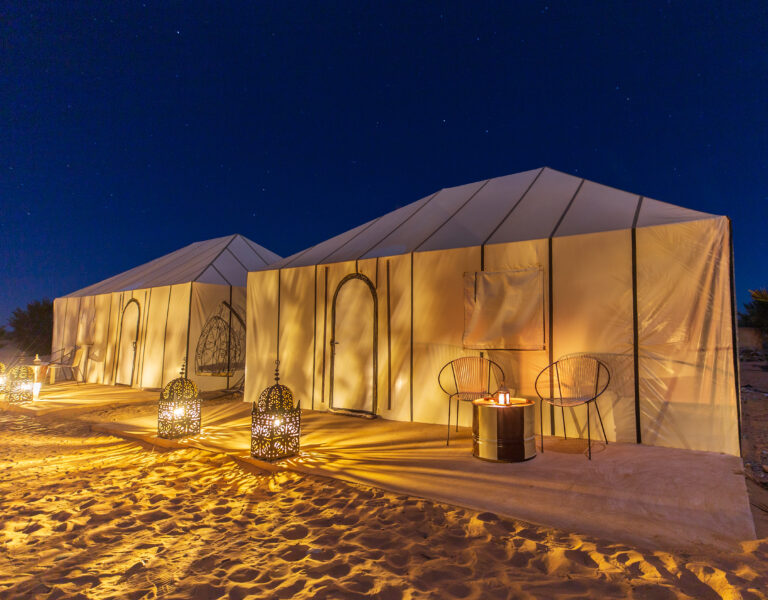
Most camps today have real beds with warm blankets, and many tents have private bathrooms with hot water. Tell us your preference and we will choose the right camp for you.
Sun and Sand Protection
- Sunscreen (SPF 50) and lip balm with SPF
- Sunglasses: the light on the dunes is very strong
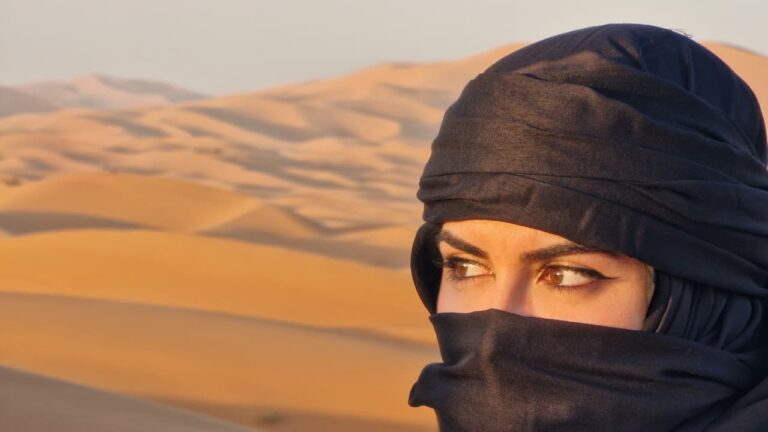
- A cheche: you can buy one in Merzouga or Rissani, and your guide will show you how to tie it
- Zip bags to protect your phone and camera from fine sand
- Eye drops if you wear contact lenses: glasses are easier in the desert
What Not to Bring
- A big suitcase into the dunes: it stays in the car
- Expensive jewellery
- Too many heavy clothes: layers are better
- A drone, unless you have checked the rules first: drones are restricted in Morocco and can be taken at the airport
For the full route, the stops on the way and the best length for your trip, read our complete Marrakech to Merzouga guide and how many days you need for the desert.
Frequently Asked Questions
Is it cold in the Sahara at night?
Yes, especially from November to March, when nights can get close to freezing. Even in spring and autumn, you will want a warm layer after sunset.
Can I wear shorts in the desert?
You can in the camp, but long trousers are much better for the camel ride and for the sun. In villages and nomad homes, longer clothes are also more respectful.
Do I need to bring a sleeping bag?
No. Desert camps provide beds, blankets and bedding. In winter we make sure you have extra blankets.
Can I buy a cheche or scarf in Morocco?
Yes, easily, in Marrakech, Merzouga or Rissani. Your guide can help you choose one and show you how to wear it.
Ready for your Sahara adventure?
Tell us your dates and we will plan your private desert tour, with a packing tip or two from your driver.
See desert tours Chat on WhatsApp