

Your first trip to Morocco will be full of colour, flavours and warm welcomes, but also a few surprises if you don’t know the local habits. As a local team from Marrakech, we answer the same questions from our guests every week. Here are our Morocco travel tips for first-timers: money, SIM cards, clothing, bargaining, tipping, food and getting around, so you can travel with confidence.
1. Money and Payments
- The currency is the Moroccan dirham (MAD). It is a closed currency, so you usually get it once you arrive.
- ATMs are easy to find in cities and towns. Withdraw in bigger amounts to save on bank fees.
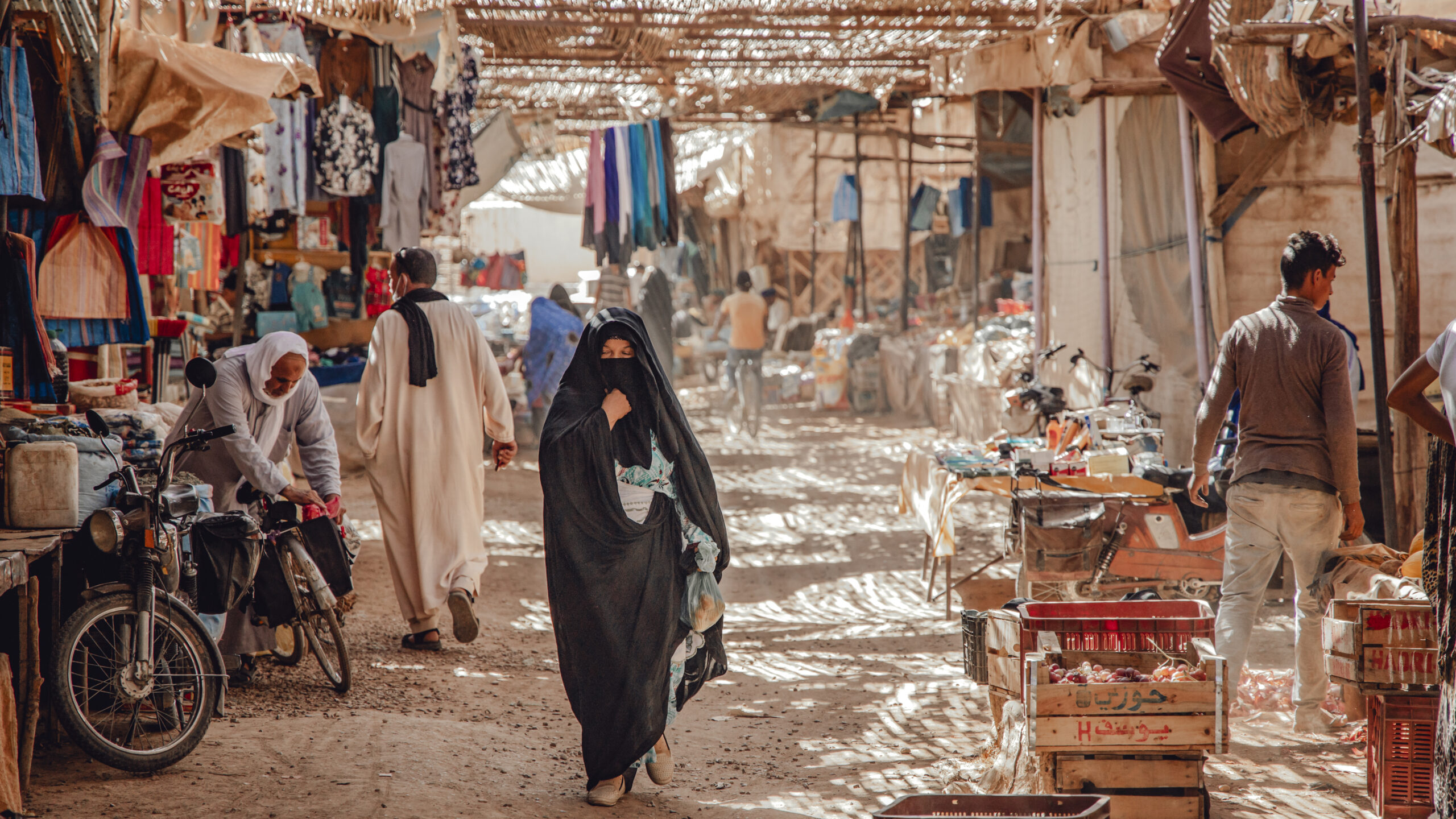
- Cash is king in the souks, small cafés, taxis and villages. Hotels, riads and bigger restaurants often accept cards.
- Keep some small notes and coins for tips, tea and small purchases.
2. SIM Cards and Internet
Buying a local SIM card is easy and cheap. You can get one at the airport or in town from the main operators: Maroc Telecom, Orange and inwi. Bring your passport. Mobile data works well in cities and on the main roads, but can be weak in the mountains and in the desert. Most riads and hotels have Wi-Fi.
3. Language
Moroccans speak Darija (Moroccan Arabic) and Amazigh (Berber) languages. French is widely used, and Spanish is common in the north. In tourist areas, many people speak English. A few words go a long way: salam (hello), shukran (thank you) and la, shukran (no, thank you).
4. What to Wear
Morocco is a welcoming country, and there is no strict dress code for visitors. Still, covering shoulders and knees is appreciated, especially in the medinas, villages and religious places, and it helps you blend in. Light, loose clothes are best in the heat. Bring good walking shoes for the medinas and a warm layer for the evenings in the mountains and the desert. For the Sahara, see our desert packing list.
5. Bargaining in the Souks
- Bargaining is normal in the souks, but not in supermarkets, restaurants or shops with fixed prices.
- Only start if you really want to buy. Take your time, smile and keep it friendly.
- Decide in advance how much you are happy to pay, and be ready to walk away politely.
- Buying directly from workshops, with a guide, is often the best way to find good quality.
6. Tipping
Tipping is part of daily life in Morocco and is always appreciated. It is common to leave a little for waiters, guides, drivers, hotel staff and anyone who helps you with luggage. Small coins are also expected for photos with street performers or for watching your car. There are no strict rules: tip what feels fair for the service.
7. Food and Water
- Moroccan food is delicious and generous: tagine, couscous, harira soup, msemen and mint tea. Try the local dishes in each region.
- Drink bottled or filtered water, and be careful with ice and raw salads in very simple places during your first days.
- Street food is part of the experience; choose busy stalls with a quick turnover.
- Vegetarian food is easy to find; let your riad or guide know about allergies.
8. Local Customs
- Ask before taking photos of people, especially women and older people.
- Non-Muslims cannot enter most mosques, with the notable exception of the Hassan II Mosque in Casablanca, which offers guided visits.
- During Ramadan, many Moroccans fast from sunrise to sunset. Travel is still easy, but avoid eating or drinking openly in the street during the day, and check the dates before you go.
- Use your right hand to eat and to give or receive things.
- Alcohol is available in some hotels, restaurants and shops, but drinking in public is not accepted.
9. Getting Around
Trains connect the main cities in the north and centre, including the high-speed Al Boraq between Tangier and Casablanca, and buses cover longer routes. But many of the best places, like the Atlas, the gorges and the Sahara, are far from train lines. That is why most visitors choose a private driver-guide: you travel in comfort, stop where you want, and have a local to explain everything on the way.
Plan Your First Trip
- When to go: spring and autumn are ideal. See our month by month guide.
- How long: 7 to 10 days is perfect for a first visit. See our Morocco itineraries for 7, 10, 12 and 14 days.
- The cities: read things to do in Marrakech and things to do in Fes.
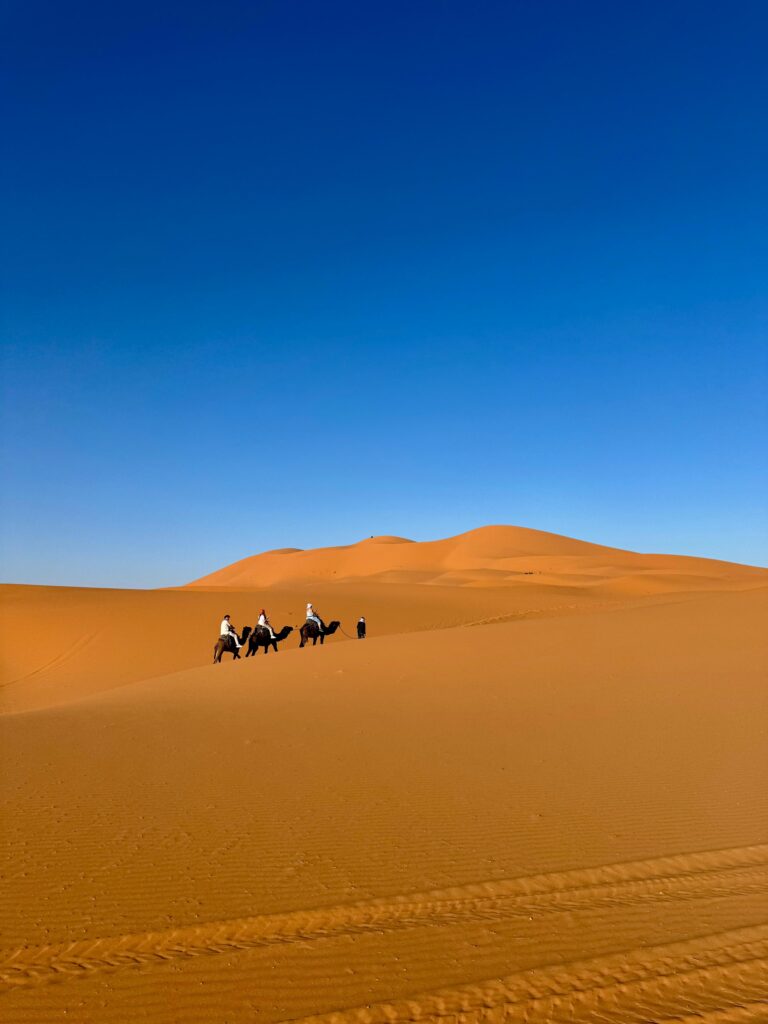
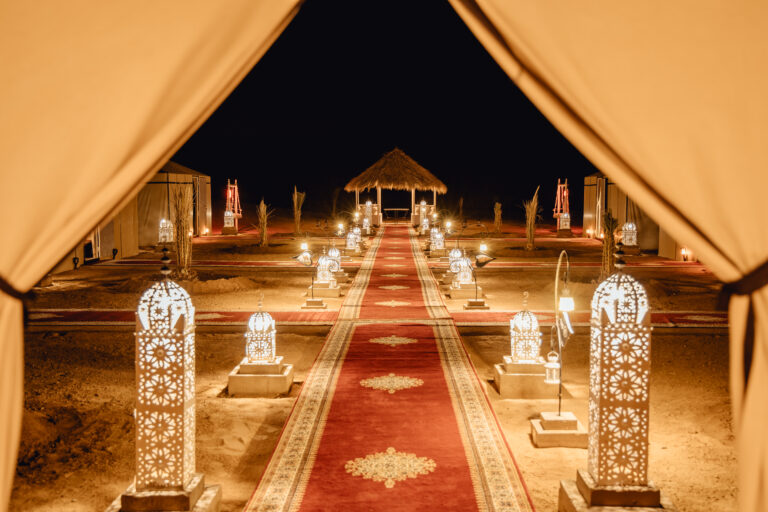
- The desert: don’t miss a night in the Sahara. Read how many days you need.
- Safety: read our honest answers in Is Morocco safe for tourists?.
Frequently Asked Questions
Do I need a visa for Morocco?
Citizens of many countries, including most of Europe, the USA and Canada, can visit without a visa for a short stay. Other nationalities may need a visa or an e-visa, and rules change, so always check the official information for your passport before you travel.
Can I use euros or dollars in Morocco?
Some hotels and shops accept them, but the exchange rate is usually poor. It is better to pay in dirhams.
Is Morocco good for a first trip outside Europe?
Yes. It is close, welcoming and easy to travel with a local driver-guide, and it offers a real change of scenery.
Ready for your Moroccan adventure?
Tell us your dates and what you would love to see, and we will plan your first trip to Morocco with you.
See our tours Chat on WhatsApp